How to Use Inulinase with Agave Inulin for Fructose Production
Use inulinase to hydrolyze agave inulin into fructose syrups. Review pH, temperature, dosage, QC, COA/TDS/SDS, and suppliers.
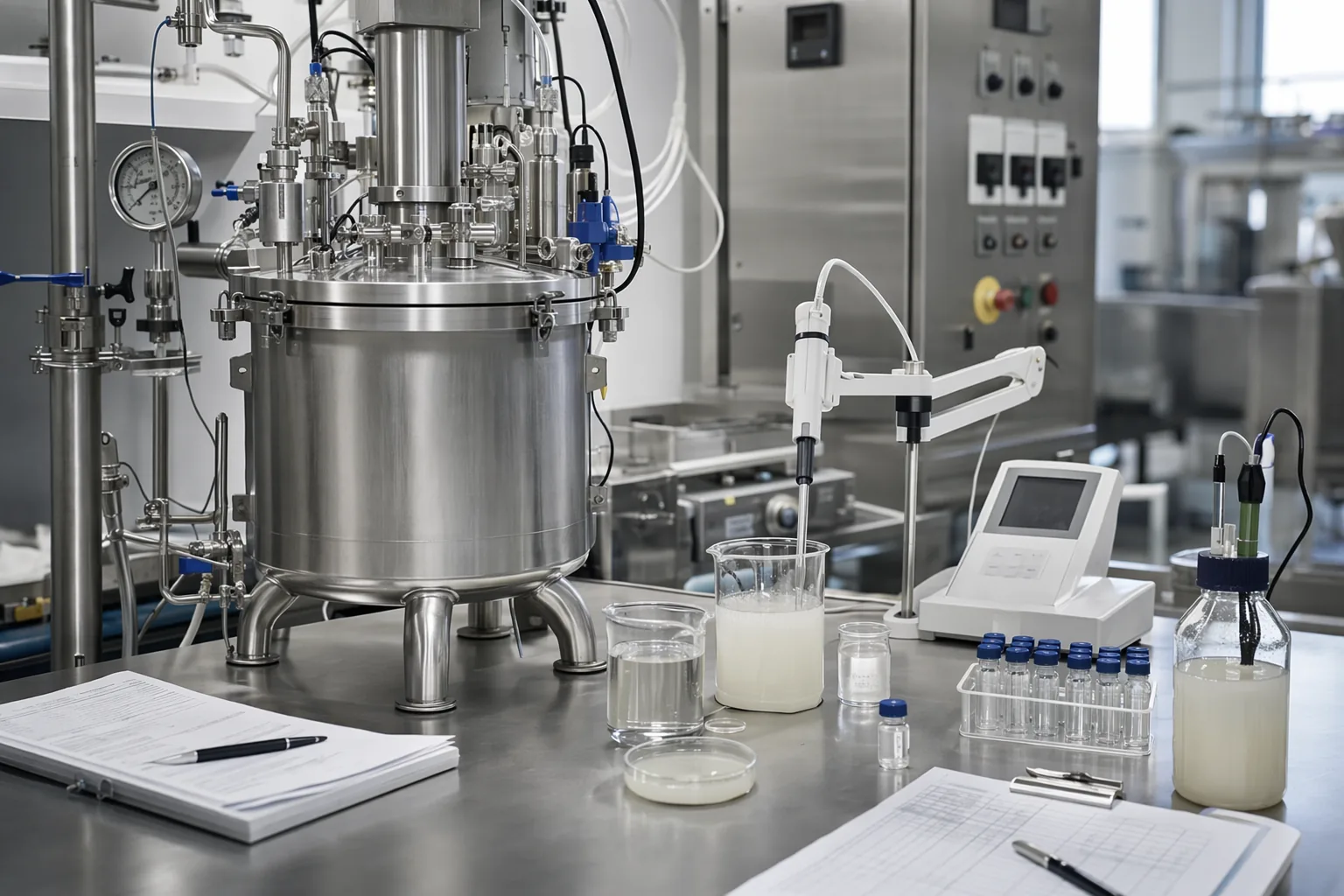
For syrup and sweetener manufacturers converting agave inulin into fructose-rich syrup with inulinase: what changes with agave as the feedstock, how to run hydrolysis trials, which QC checks protect the specification, and how to compare suppliers on cost-in-use. Buying for production or resale? Request a wholesale quote with the product, the quantity per order or per month and the destination country at hello@mail.enzymeproject.com, or use the quote form on our home page.
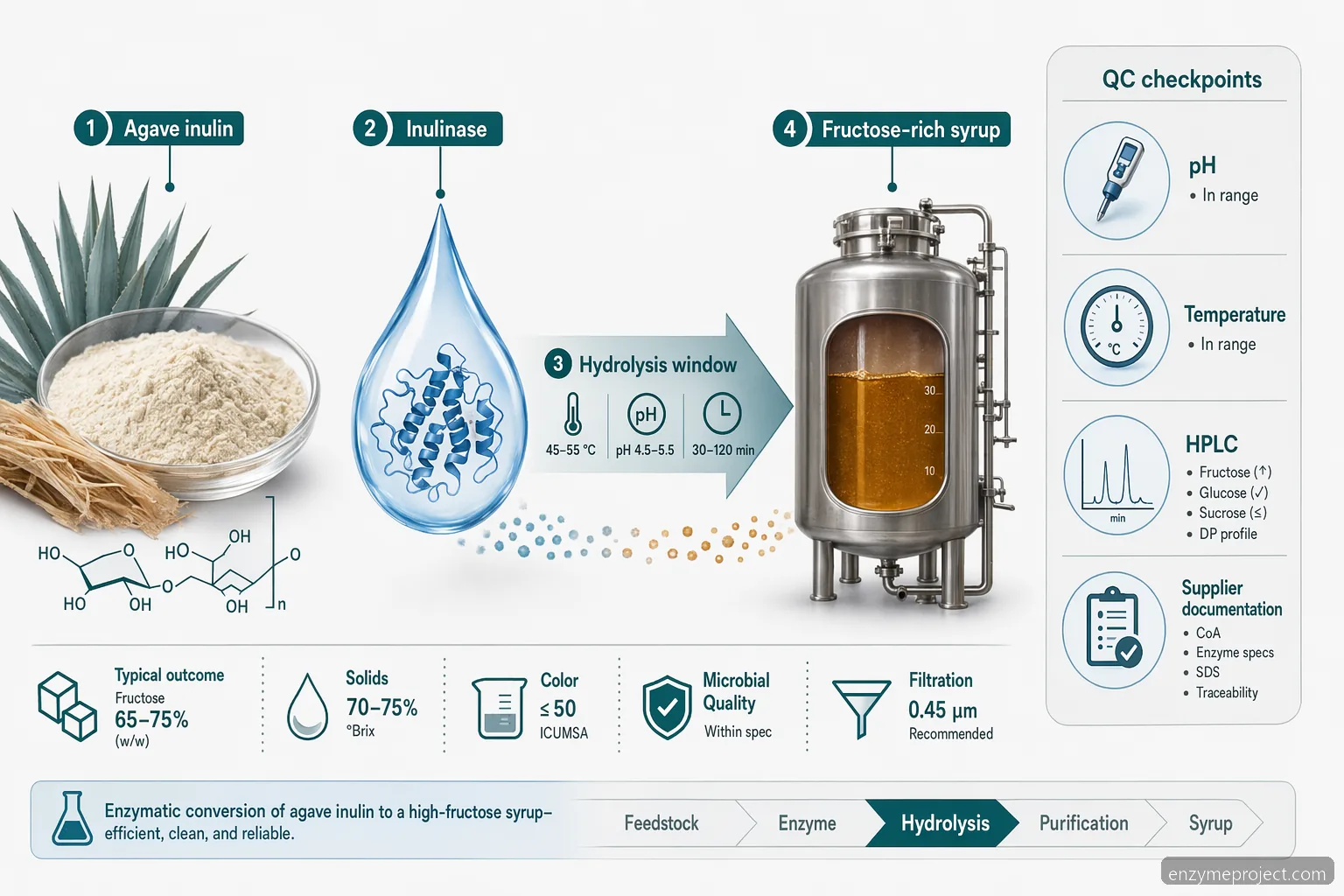
Why Agave Inulin Needs a Process-Specific Inulinase Strategy
Agave inulin is a fructan-rich raw material used in formulations where processors want to generate fructose from inulin under controlled conditions. Inulinase enzyme hydrolyzes beta-2,1 fructosyl linkages, reducing long-chain inulin into fructose, glucose traces, and shorter fructooligosaccharides depending on enzyme type and conversion target. For B2B formulation teams, the main question is not only what is inulin or inulin what is it, but how its botanical source, chain-length distribution, ash level, color, and dry solids affect hydrolysis efficiency. Agave inulin may behave differently from chicory inulin or chicory root inulin because raw-material specifications and upstream extraction conditions vary. Successful fructose production therefore starts with substrate characterization, bench screening, and a defined syrup target rather than a generic enzyme addition rate. The objective is a repeatable, food-grade process with predictable sweetness, viscosity, filtration behavior, and cost-in-use.
Define target fructose level before selecting enzyme dosage. • Compare agave inulin powder lots for solids, color, ash, and DP profile. • Use pilot data to confirm performance before commercial scale-up.
Recommended Process Window for Hydrolysis Trials
Most industrial inulinase trials for fructose production begin in the mildly acidic range, commonly pH 4.5–5.5, with temperatures around 45–60 °C. The final setpoint depends on the enzyme preparation, microbial control strategy, holding time, and desired conversion. A practical starting matrix may test three pH points, two temperatures, and several enzyme dosages expressed as activity units per gram of inulin solids. Substrate solids often require optimization because high-solids agave inulin slurries can increase viscosity and limit mass transfer, while low solids may reduce plant throughput. Formulators should add the inulinase after the inulin powder or syrup is fully dispersed and adjusted to temperature and pH. Avoid assuming that conditions validated for chicory enzyme processing or chicory inulin automatically transfer to agave; confirm with actual raw material, water quality, and plant residence time.
Starting pH screen: 4.5, 5.0, and 5.5. • Starting temperature screen: 50 °C and 55 °C. • Typical trial hold: 2–24 hours, based on conversion target. • Dose by declared activity units, not only by weight percentage.
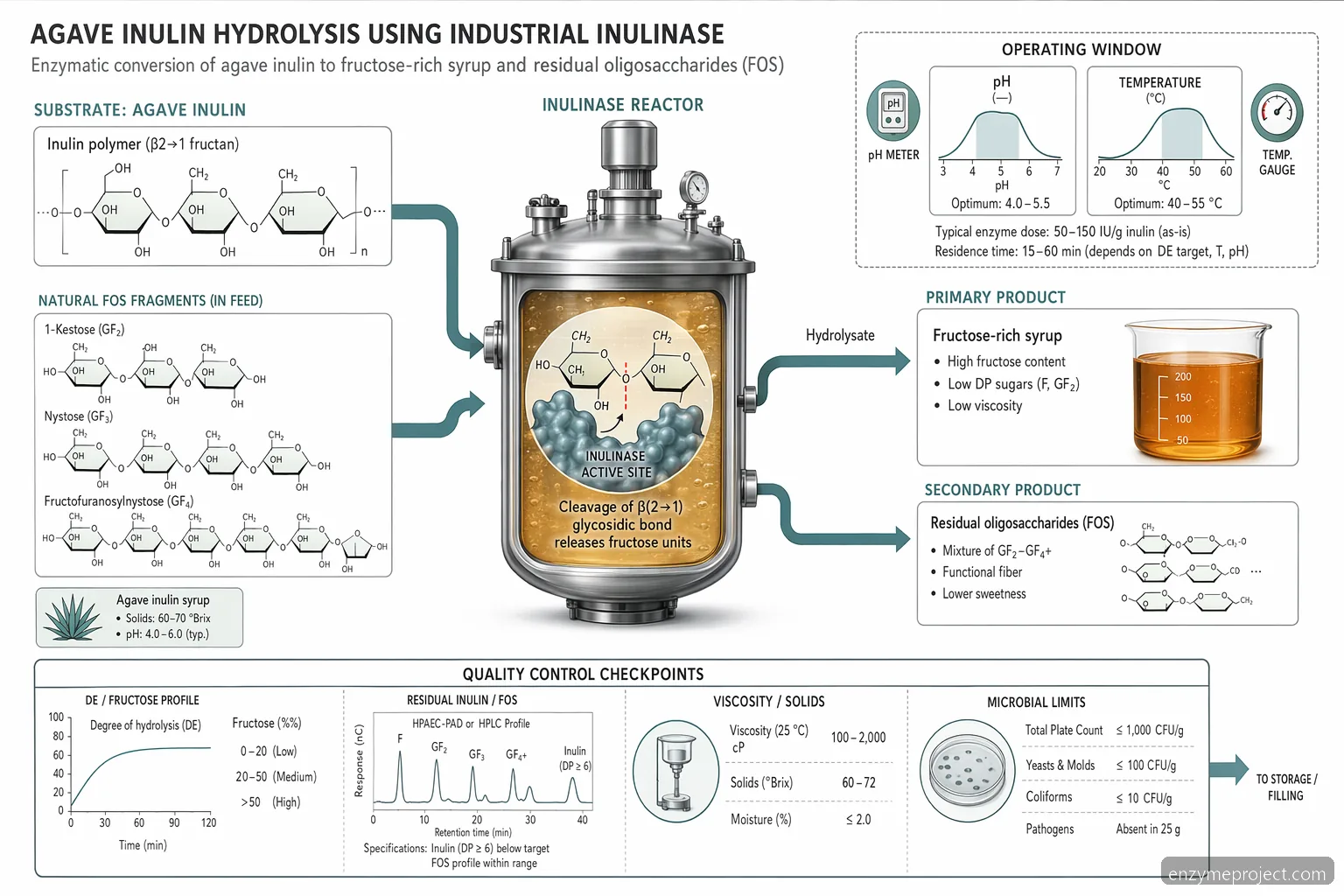
Formulation Variables: Solids, FOS, and Sweetener Targets
The formulation target determines whether the process should maximize fructose release or retain some inulin with FOS for functional carbohydrate positioning. A high-conversion sweetener stream generally requires enough enzyme, time, and temperature stability to reduce residual inulin fiber and short-chain fructans. A partially hydrolyzed stream may be designed to preserve selected FOS fractions while still improving sweetness and solubility. This distinction matters when buyers specify inulin with FOS, inulin fiber, or fructose-rich syrup for food applications. It also affects downstream evaporation, filtration, color control, and labeling review. Industrial teams should keep the discussion separate from consumer supplement claims or the common confusion around inulin insulin terminology; inulin is a carbohydrate fiber, while insulin is a hormone. For commercial formulation, the key is carbohydrate profile, process reproducibility, and compliance with the intended food category.
Set specifications for fructose, glucose, sucrose if present, FOS, and residual inulin. • Monitor viscosity changes during hydrolysis. • Confirm final sensory and sweetness profile in the finished matrix.
Quality Control Checks During Pilot Validation
Pilot validation should convert bench results into operating limits that production, QA, and procurement can use. At minimum, collect time-course samples for fructose release, residual inulin, pH drift, dry solids, viscosity, color, and microbial indicators. HPLC is commonly used for carbohydrate profiling, while refractometry may track soluble solids but cannot confirm conversion on its own. If the plant uses heat inactivation, verify that the selected time and temperature reduce residual inulinase activity to the required internal specification without damaging color or flavor. Filtration performance should also be checked, because incomplete dispersion of agave inulin powder or high mineral load can affect clarification. QC should document batch-to-batch reproducibility and define acceptable ranges before scale-up. These data support cost-in-use calculations and help compare inulinase suppliers on delivered performance rather than purchase price alone.
Track fructose release by validated carbohydrate method. • Measure residual inulin or DP distribution where relevant. • Confirm enzyme inactivation or downstream removal strategy. • Record viscosity and filtration rate at target solids.
Supplier Qualification and Cost-in-Use Evaluation
For B2B purchasing, inulinase selection should include both technical fit and supply assurance. Ask each supplier for a current COA, TDS, and SDS, plus allergen statements, country of origin information, food-grade suitability data, storage guidance, and shelf-life conditions. The TDS should define activity units, recommended pH and temperature ranges, appearance, carrier system, and handling requirements. The COA should verify lot-specific activity and microbiological parameters. During qualification, compare enzymes using the same agave inulin substrate, solids level, target conversion, and process time. Cost-in-use should include enzyme dosage, reaction time, heating energy, yield, filtration impact, waste, and inventory risk, not only price per kilogram. A strong supplier should support pilot validation, provide consistent documentation, answer scale-up questions, and maintain traceability without making unsupported performance or regulatory claims.
Request COA, TDS, and SDS before purchase approval. • Run side-by-side trials on identical agave inulin lots. • Calculate cost per kilogram of target fructose solids. • Evaluate lead time, storage stability, and technical support.
Inulinase for Research & Industry
Need Inulinase for your lab or production process?
ISO 9001 certified · Food-grade & research-grade · Ships to 80+ countries
Frequently Asked Questions
What is inulin in an industrial fructose production context?
Inulin is a fructan carbohydrate made of fructose units, often sourced from agave, chicory root, or other plants. In fructose production, processors use inulinase to hydrolyze these fructan chains into fructose-rich syrup streams. The relevant industrial questions are chain-length distribution, dry solids, viscosity, color, conversion rate, and finished carbohydrate profile, not consumer supplement dosage or medical positioning.
Can the same inulinase process be used for agave inulin and chicory inulin?
The same inulinase may work on both agave inulin and chicory inulin, but conditions should not be copied without validation. Botanical source, extraction history, DP profile, ash, and solids behavior can change hydrolysis rate and filtration performance. Run bench and pilot trials using the actual commercial raw material, then confirm pH, temperature, enzyme dosage, residence time, and QC specifications before scale-up.
How should enzyme dosage be selected for agave inulin hydrolysis?
Select dosage through a controlled screening study using the supplier’s declared activity units. Test several enzyme levels at target pH, temperature, solids, and hold time, then measure fructose release, residual inulin, FOS profile, viscosity, and color. The best dosage is usually the lowest level that meets conversion and throughput requirements with acceptable cost-in-use, not necessarily the highest conversion at bench scale.
What documents should buyers request from an inulinase supplier?
Industrial buyers should request a current COA, TDS, and SDS for the specific inulinase product. The package should clarify activity units, recommended operating conditions, storage, shelf life, handling, composition considerations, microbial specifications, and lot traceability. For qualification, also request application guidance and pilot support, while verifying that any regulatory or suitability statements match the intended food process and market.
Is inulin the same as insulin?
No. Inulin is a plant-derived fructan carbohydrate used as a fiber ingredient or as a substrate for enzymatic fructose production. Insulin is a hormone and is unrelated to industrial inulinase processing. For B2B formulation work, the important terms are agave inulin, inulin powder, inulin fiber, FOS, fructose release, and process specifications. This page addresses food manufacturing, not medical or supplement advice.
Request a Wholesale Quote
Manufacturers, ingredient distributors and resellers: send the product or target output, the quantity per order or per month and the destination country to hello@mail.enzymeproject.com; volumes and prices are quoted per order. Request an inulinase formulation review for your agave inulin fructose process, including pilot trial planning and cost-in-use support. See our application page for Turn inulin into higher-value ingredients at /applications/inulin-vs-psyllium-husk/ for specs, MOQ, and a free 50 g sample.
Contact Us to Contributehello@mail.enzymeproject.com