Is Inulin Low Fodmap: Using Inulinase in Fructose Production Formulations
B2B guide to inulinase for converting chicory or agave inulin into fructose syrups, with process ranges, QC, COA/TDS/SDS, and pilot validation.
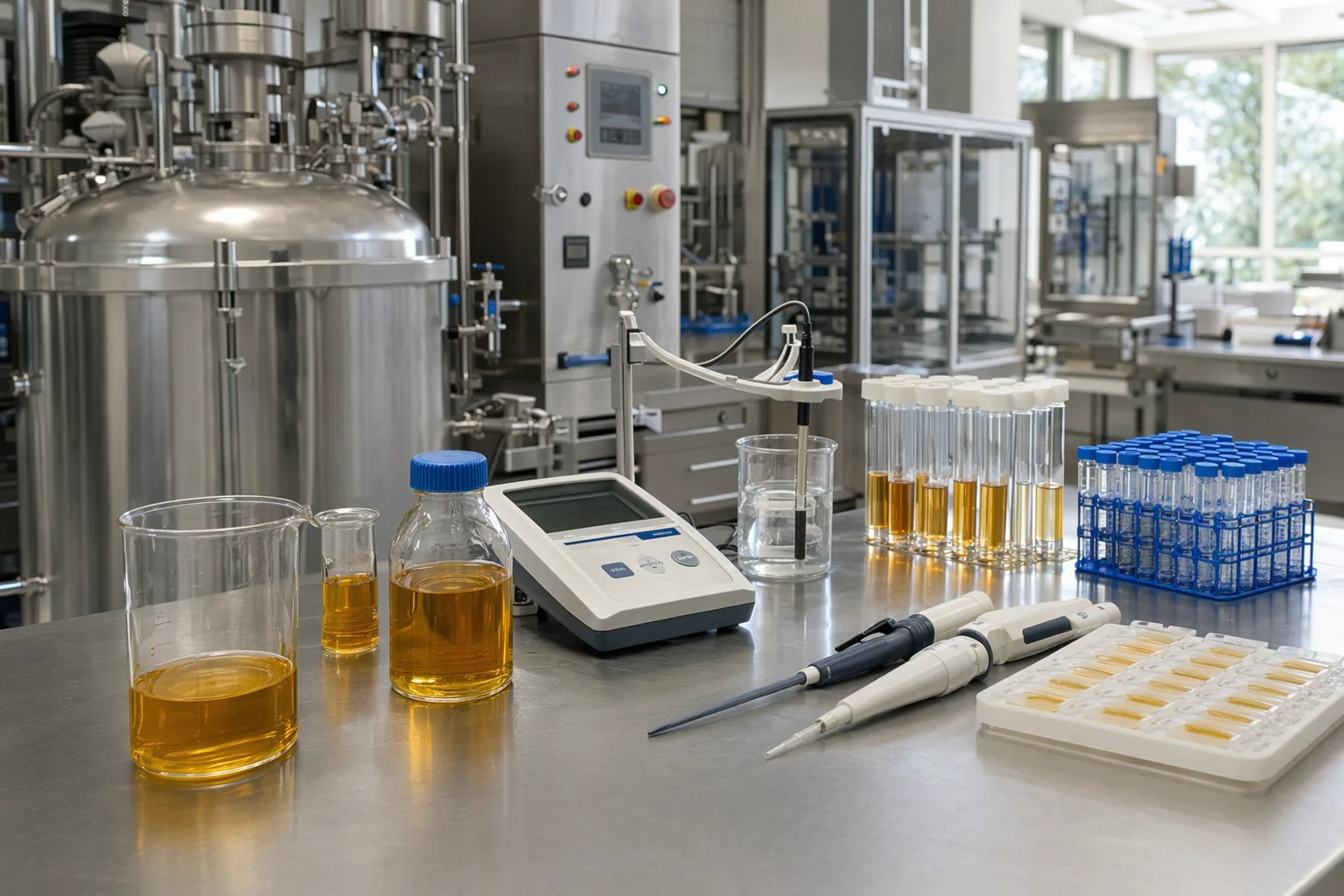
For food and ingredient manufacturers, the practical question is not supplement positioning; it is how to hydrolyze inulin reliably, validate conversion, and qualify an inulinase supplier for cost-effective fructose production.
Buying for production or resale? Request a wholesale quote with the product, the quantity per order or per month and the destination country at hello@mail.enzymeproject.com, or use the quote form on our home page.
The Formulation Meaning of “Is Inulin Low Fodmap”
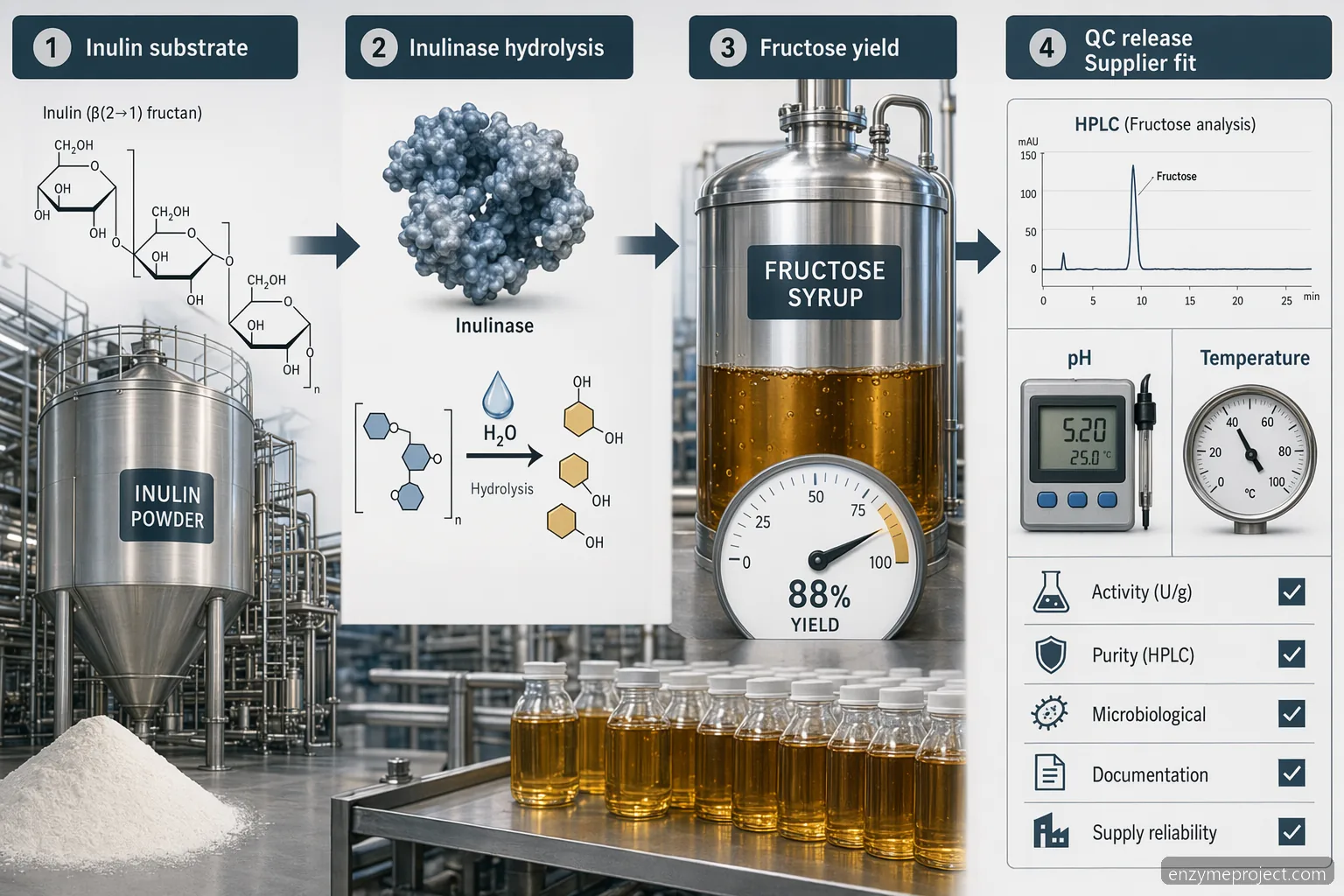
Searches for “is inulin low fodmap” often come from consumer nutrition, but an industrial fructose production project has a different objective. Inulin is a fructan: a chain of fructose units, usually extracted from chicory root, agave, Jerusalem artichoke, or similar raw materials. In consumer labeling contexts, native inulin fiber and inulin with FOS may be considered fermentable carbohydrates, and finished-product tolerance depends on serving size and regulatory interpretation. This page does not provide medical or dietary advice. For manufacturers, the key formulation question is whether inulinase can reduce residual fructan content and shift the carbohydrate profile toward fructose, glucose, and defined oligosaccharides. That requires enzyme selection, process validation, and analytical confirmation rather than a generic claim. If your project uses chicory inulin, agave inulin, or soluble inulin powder, inulinase can be evaluated as a processing aid for controlled hydrolysis.
Focus: industrial hydrolysis, not health claims • Substrates: chicory inulin, agave inulin, and inulin powder • Outputs: fructose-rich syrup, glucose traces, and managed FOS fractions
What Is Inulin and Why Use Inulinase?
What is inulin in a processing plant? It is a beta-2,1-linked fructan with chain length and purity that vary by botanical source, extraction method, and refining level. Chicory root inulin is common because it is commercially available at food ingredient scale, while agave inulin may offer different average degree of polymerization and mineral load. Inulinase enzyme catalyzes hydrolysis of these fructan chains. Exo-inulinase activity tends to release fructose from chain ends, while endo-inulinase activity can generate shorter fructooligosaccharides before further conversion. For fructose production, buyers usually want high conversion, predictable viscosity reduction, and minimal side reactions. The enzyme preparation, carrier, stabilizers, and declared activity must match the plant’s pH, temperature, solids level, and downstream refining train. The phrase “inulin insulin” is sometimes searched by mistake; inulin and insulin are unrelated in manufacturing function, and enzyme specification should use inulinase activity, not metabolic terminology.
Confirm botanical source and average DP of the substrate • Match exo and endo activity balance to the target syrup profile • Use activity-based dosing instead of only weight-based addition
Starting Process Conditions for Fructose Production
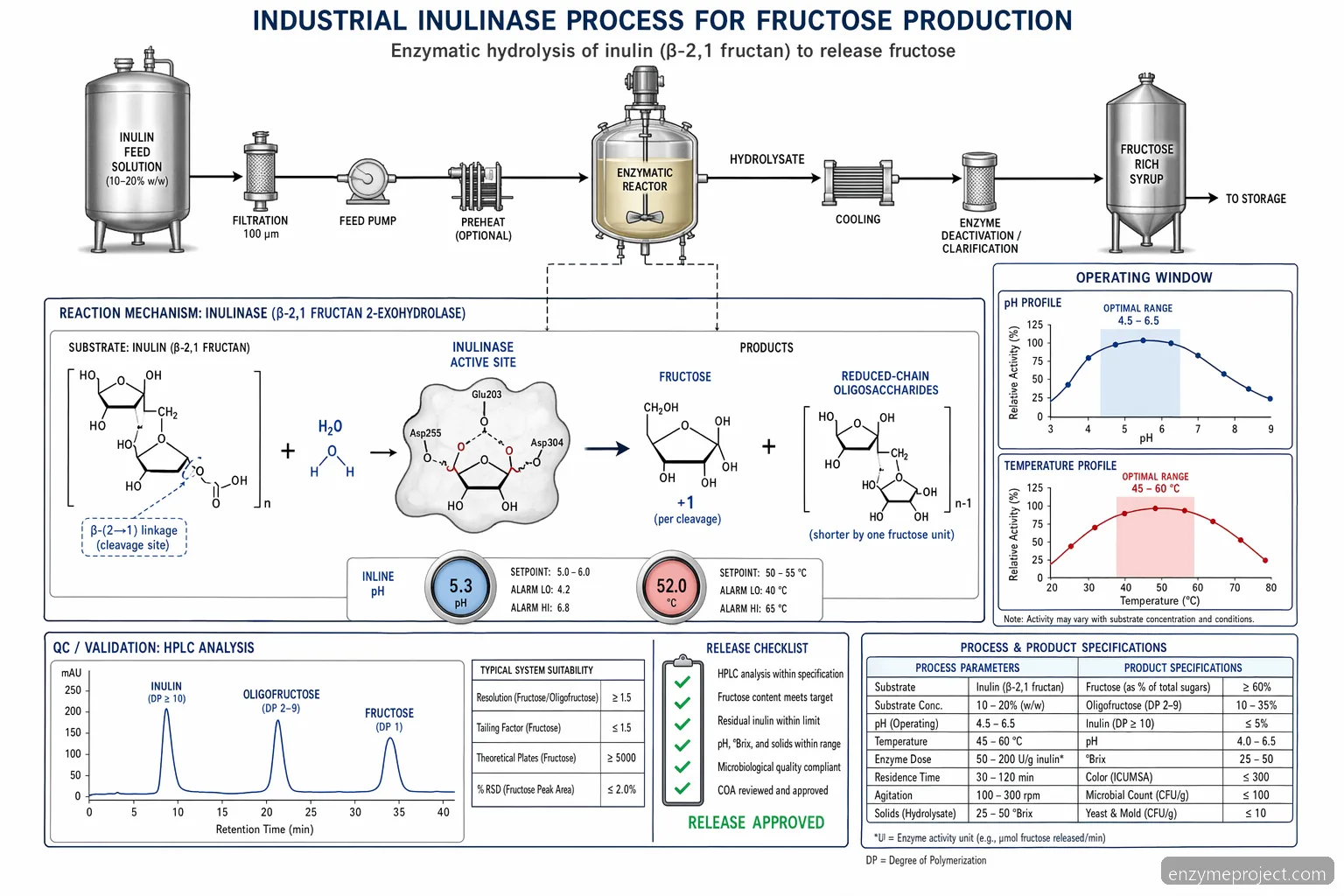
A practical inulinase trial normally begins with a screened design rather than a fixed recipe. Many commercial inulinase preparations operate effectively near pH 4.5–5.5 and 45–60°C, but the supplier TDS should define the recommended optimum and stability window. Substrate slurries or liquors are often prepared at 20–45% dry solids, depending on pumpability, viscosity, and heat-transfer capability. A reasonable first dosage screen is 0.1–1.0 kg enzyme preparation per metric ton of dry inulin, or an activity-equivalent range supplied by the enzyme producer. Reaction time commonly falls between 4 and 24 hours, with sampling at defined intervals to model conversion rate. After target hydrolysis, thermal inactivation may be evaluated around 80–90°C for 10–20 minutes, provided the syrup and equipment tolerate the hold. These ranges are starting points for pilot validation, not universal production guarantees.
Screen pH, temperature, dry solids, dosage, and time together • Track viscosity changes because inulin hydrolysis can alter mixing load • Validate heat inactivation before downstream filtration or evaporation
QC Checks for Conversion, Consistency, and Release
For an industrial buyer, inulinase performance is only useful if it can be measured consistently. HPLC or an equivalent validated carbohydrate method should quantify fructose, glucose, sucrose if present, residual inulin fiber, and FOS distribution. Reducing sugar, DE, Brix, pH, conductivity, ash, color, turbidity, and viscosity help connect lab conversion to plant operability. For food sweetener applications, microbiological testing and hold-time controls should be aligned with the facility’s food safety plan. If the target is a fructose-rich syrup, define the release specification as a range rather than a single number, because raw material degree of polymerization and enzyme activity can vary. Retain representative samples from substrate, enzyme lot, reaction intermediate, and finished syrup. Good QC also separates enzyme failure from substrate variation, heat history, mineral inhibition, poor mixing, or unplanned dilution.
Use HPLC for carbohydrate profile confirmation • Define residual inulin and FOS limits by application • Retain samples from each critical lot and process stage
Cost-in-Use and Supplier Qualification
The lowest price per kilogram of inulinase is rarely the lowest cost-in-use. Buyers should compare conversion per unit activity, reaction time, energy demand, required pH adjustment, filtration impact, and yield of saleable fructose solids. A more concentrated enzyme may reduce storage, dosing error, and freight cost, while a more stable formulation may allow shorter reaction time or higher dry solids. Supplier qualification should include current COA, TDS, SDS, declared activity method, carrier and preservative information, allergen statement where relevant, country of origin, shelf life, storage guidance, and batch-to-batch activity history. Ask whether pilot quantities and technical support are available before committing to production volumes. For multi-site manufacturers, verify packaging options, lead times, change notification practice, and retained-sample procedures. The supplier should be able to discuss performance data without making unsupported finished-product or medical claims.
Compare enzyme cost per ton of dry inulin converted • Request COA, TDS, SDS, and activity test method • Confirm pilot support, lead time, and change notification practice
How EnzymeProject.com Supports Inulinase Buyers
Enzymeproject helps formulation, procurement, and process teams define the inulinase requirement before supplier selection. A strong inquiry should specify the substrate source, dry solids target, current pH, available heating and cooling, batch or continuous operation, desired fructose level, acceptable FOS range, downstream refining, and regulatory market. If the project begins with chicory enzyme searches or general inulinase enzyme sourcing, converting that interest into a technical brief prevents misquotation and reduces pilot delays. We can help frame an activity-based comparison, identify the data required for COA/TDS/SDS review, and outline bench or pilot trials. The goal is practical: validate conversion, confirm product quality, and calculate cost-in-use under your plant conditions. Final specifications should always be confirmed with actual lots, analytical testing, and your internal quality and regulatory teams.
Prepare a technical brief for enzyme suppliers • Structure bench and pilot validation plans • Align procurement questions with process and QC requirements
Inulinase for Research & Industry
Need Inulinase for your lab or production process?
ISO 9001 certified · Food-grade & research-grade · Ships to 80+ countries
Frequently Asked Questions
Is inulin low FODMAP after inulinase treatment?
That depends on the degree of hydrolysis, residual fructan level, serving size, analytical method, and the market’s labeling rules. This page does not provide medical or diet advice. For manufacturers, inulinase should be evaluated by measuring residual inulin fiber and FOS distribution after processing. Do not rely on a generic low-FODMAP assumption; validate the finished ingredient or product with appropriate testing and regulatory review.
What is inulin in fructose production?
Inulin is a fructan carbohydrate made mainly of beta-2,1-linked fructose units, often sourced from chicory root inulin or agave inulin. In fructose production, it serves as a hydrolysis substrate. Inulinase enzyme breaks the fructan chain into fructose and, depending on reaction conditions and enzyme profile, shorter FOS fractions. Substrate purity, degree of polymerization, minerals, and solids level strongly affect yield and processing behavior.
How should we dose inulinase enzyme at pilot scale?
Start with an activity-based dose recommended by the supplier, then bracket it in a design such as low, medium, and high addition rates. A common early screen is 0.1–1.0 kg enzyme preparation per metric ton of dry inulin, but activity concentration varies. Track conversion by HPLC over time, then calculate cost-in-use from enzyme cost, yield, reaction time, energy, and downstream impact.
Can inulinase process both chicory inulin and agave inulin?
Often yes, but performance should not be assumed identical. Chicory inulin and agave inulin can differ in degree of polymerization, ash, color, associated sugars, and viscosity at the same dry solids. Those differences affect hydrolysis rate, filtration, and final syrup profile. Run comparative pilot trials under the same pH, temperature, dosage, and sampling schedule before approving a shared production specification.
What documents should an inulinase supplier provide?
At minimum, request a COA for the specific lot, a TDS with activity definition and operating guidance, and an SDS for safe handling. For food ingredient production, also ask for carrier and preservative information, storage conditions, shelf life, allergen statement where relevant, origin, packaging details, and batch-to-batch activity history. Supplier qualification should include pilot support and clear change notification expectations.
Request a Wholesale Quote
Manufacturers, ingredient distributors and resellers: send the product or target output, the quantity per order or per month and the destination country to hello@mail.enzymeproject.com; volumes and prices are quoted per order. Send your inulin substrate, target fructose profile, and process limits to EnzymeProject.com for an inulinase pilot and sourcing review. See our application page for Turn inulin into higher-value ingredients at /applications/inulin-vs-psyllium-husk/ for specs, MOQ, and a free 50 g sample.
Contact Us to Contributehello@mail.enzymeproject.com