Inulin Powder Organic for Enzymatic Fructose Production
Use inulinase to convert organic inulin powder into fructose: process conditions, QC, pilot validation, cost-in-use, and supplier checks.
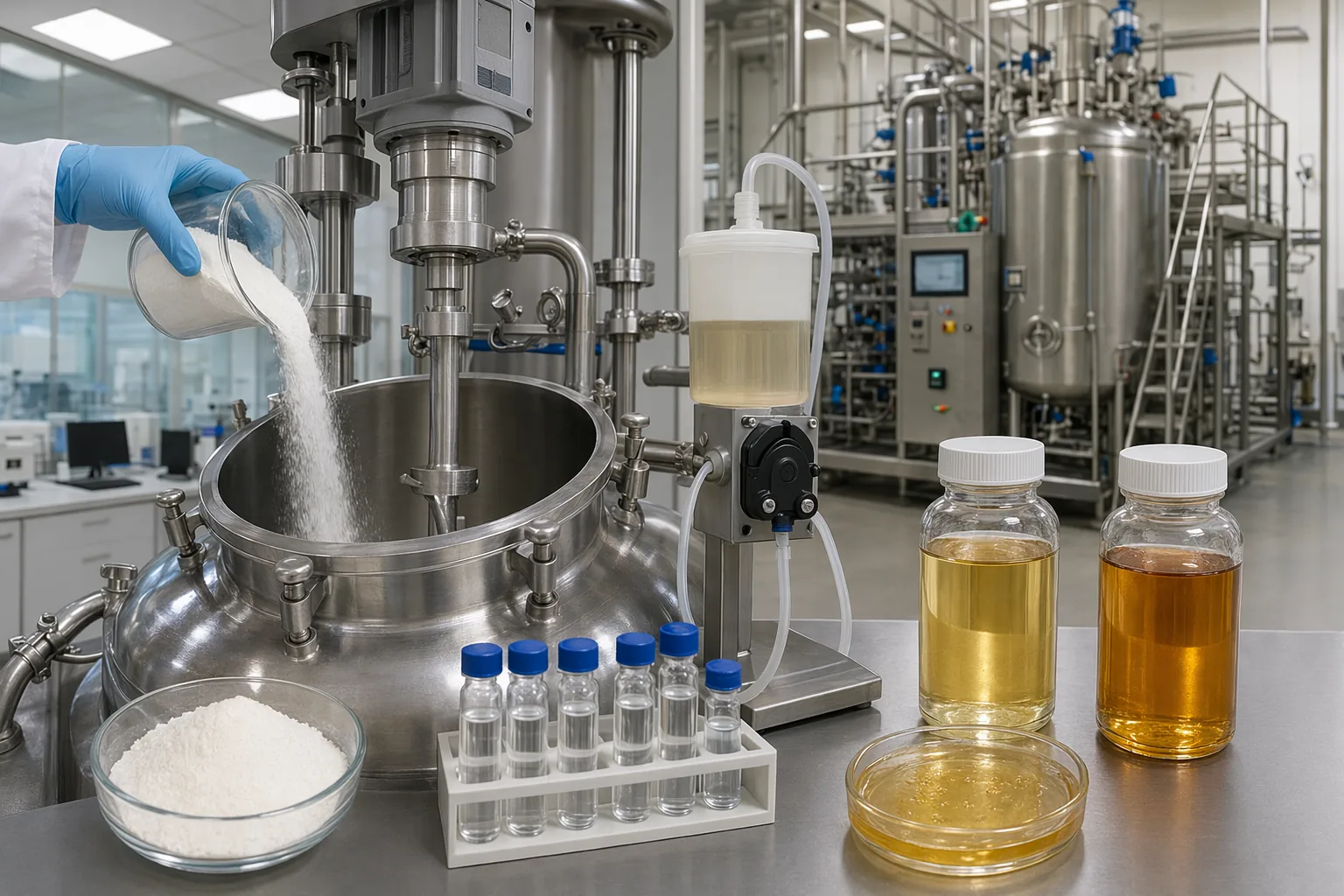
A practical B2B guide for processors converting chicory, agave, or other inulin-rich feedstocks into fructose syrup using industrial inulinase.
Buying for production or resale? Request a wholesale quote with the product, the quantity per order or per month and the destination country at hello@mail.enzymeproject.com, or use the quote form on our home page.
Why Organic Inulin Powder Is a Practical Fructose Feedstock
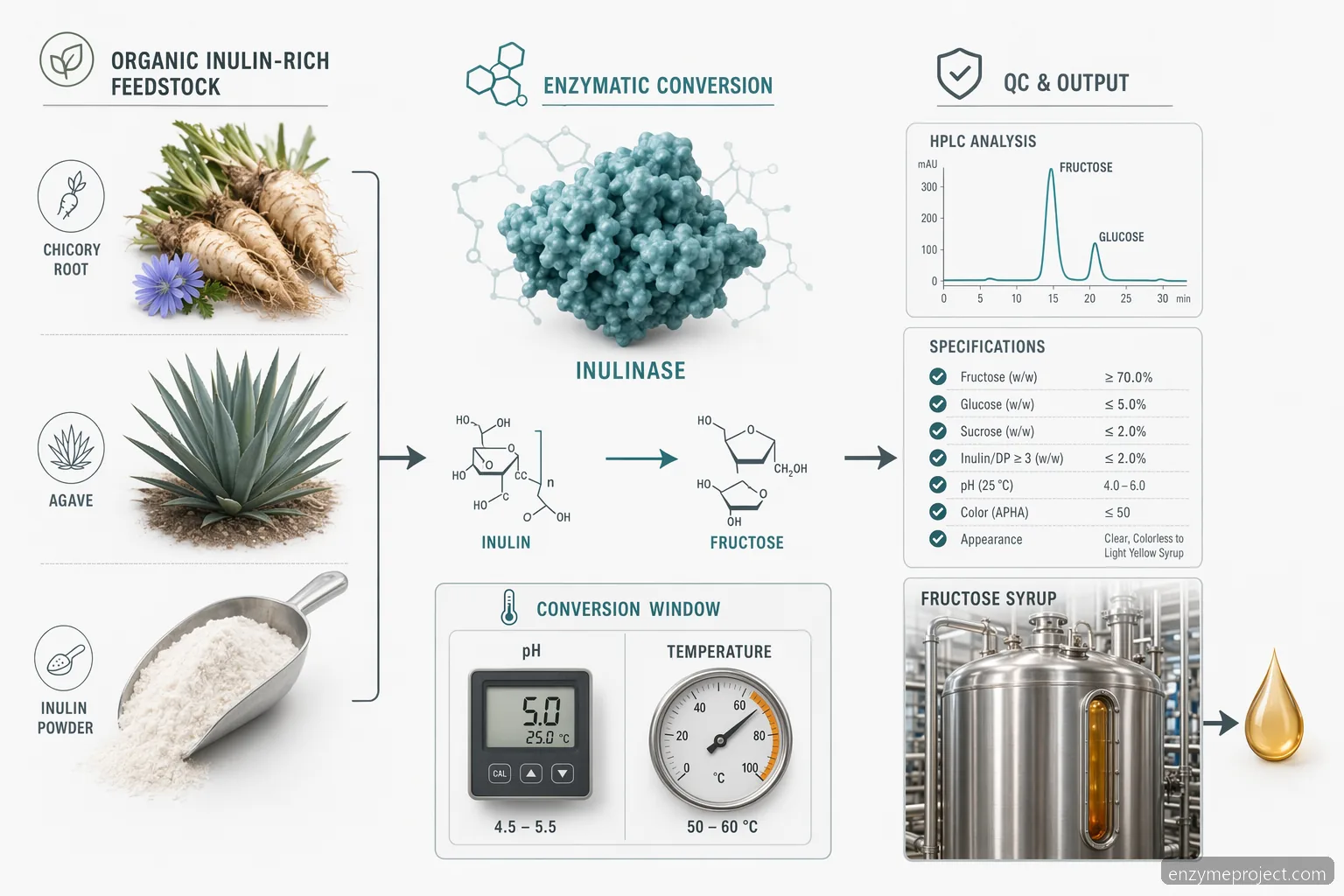
In industrial processing, inulin powder organic refers to an inulin-rich carbohydrate powder sourced from materials such as chicory root inulin, agave inulin, or other approved botanical streams with the required organic documentation. For buyers asking what is inulin, it is a fructan: a chain of fructose units, often with a terminal glucose, linked mainly by beta-2,1 bonds. Those bonds make it a suitable substrate for inulinase enzyme conversion into fructose-rich syrup. This page is not supplement guidance about inulin fiber, inulin with FOS, or consumer health claims. It is a process guide for manufacturers evaluating inulin powder as a saccharide feedstock. Feedstock choice affects viscosity, ash, color, degree of polymerization, and FOS content, all of which influence hydrolysis time, filtration load, and downstream concentration cost.
Best-fit buyers: sweetener producers, ingredient manufacturers, and contract processors. • Common feedstocks: chicory inulin, chicory root inulin, and agave inulin. • Key feedstock checks: moisture, ash, color, DP profile, FOS content, and organic documentation.
Inulinase Conversion Window for Fructose Production
Inulinase hydrolyzes inulin into fructose, with a smaller glucose fraction depending on the feedstock structure. A safe starting window for pilot work is pH 4.5-5.5 and 50-60°C for many fungal inulinase preparations, but the supplier TDS should control final setpoints. Slurry concentration is commonly evaluated at 15-35% dry solids. Lower solids reduce viscosity and mixing risk; higher solids improve evaporator economics but may require stronger agitation and better heat transfer. Initial dosage screening often starts around 0.2-2.0 kg liquid enzyme preparation per metric ton of dry inulin, or an activity-based equivalent specified by the supplier. Residence time may range from several hours to overnight depending on target dextrose equivalent, residual inulin, and FOS profile. Avoid assuming that inulin insulin is a process term; inulin is the carbohydrate substrate, not insulin.
Pilot variables: pH, temperature, enzyme dose, solids, time, and agitation. • Typical pH screen: 4.5, 5.0, and 5.5. • Typical temperature screen: 50°C, 55°C, and 60°C. • Confirm enzyme activity units and dosing basis before scale-up.
Process Flow From Slurry to Fructose Syrup
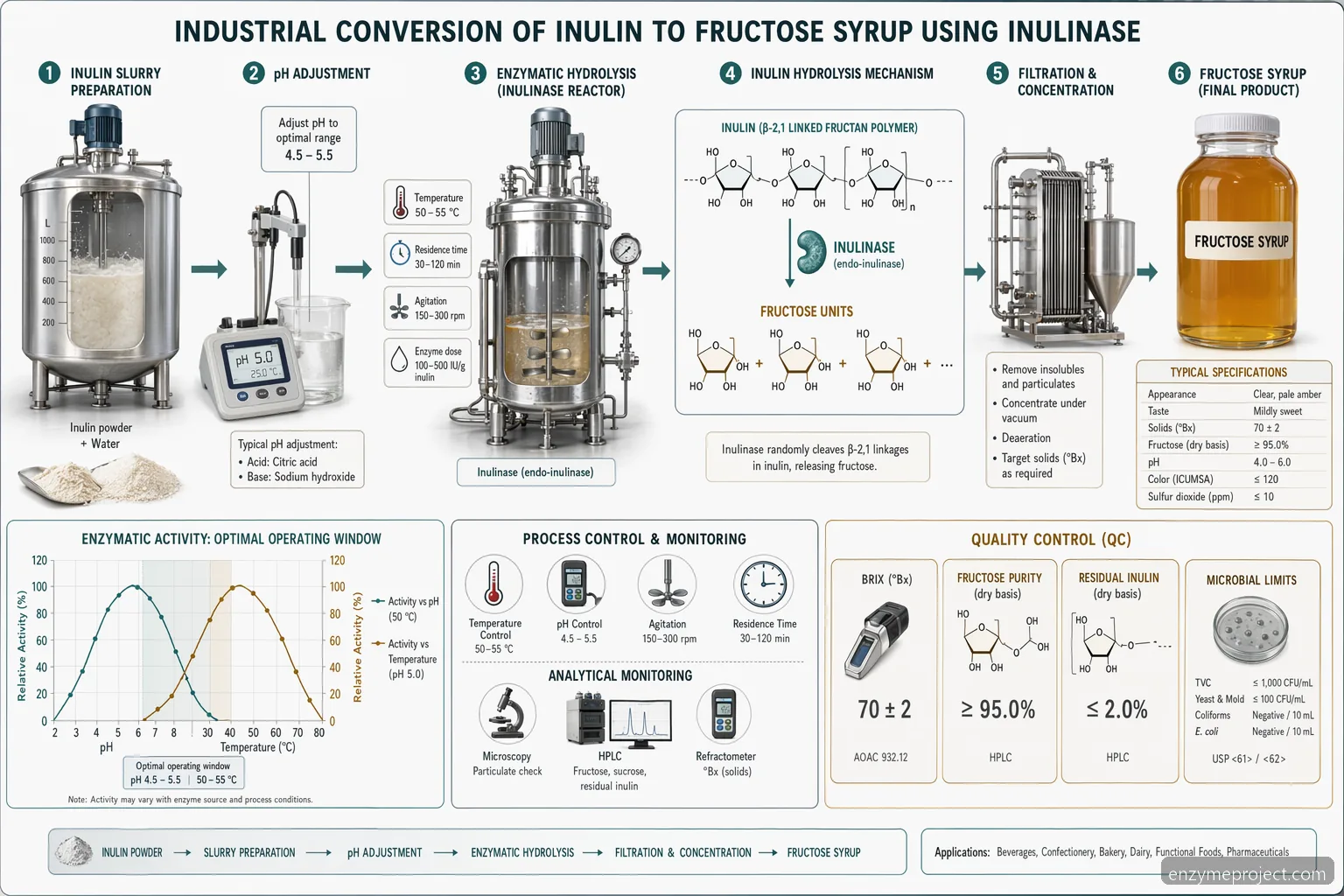
A typical process starts with water charging, pH adjustment, and gradual addition of inulin powder to limit lumping. Heat the slurry to the selected reaction temperature, verify full dispersion, then add inulinase under agitation. During hydrolysis, monitor Brix, pH drift, viscosity, and saccharide profile. When the target residual inulin or fructose level is reached, inactivate the enzyme according to the TDS; many processors evaluate 80-90°C for 10-20 minutes, then confirm no ongoing hydrolysis. Downstream steps may include clarification, activated carbon or ion exchange when required, fine filtration, evaporation, and final polishing. Organic programs should review whether each processing aid, filter aid, antifoam, or resin is permitted under the buyer’s applicable standard. The correct process design depends on required syrup concentration, color, ash, flavor neutrality, and microbial specification.
Add powder slowly to control lumping and viscosity spikes. • Hold pH with food-suitable acid or base selected for the product standard. • Confirm enzyme inactivation before final specification release. • Assess filtration and evaporation cost at pilot scale.
QC Checks That Protect Yield and Specification
The most useful QC program links enzyme performance to commercial release specifications. HPLC or equivalent carbohydrate analysis should quantify fructose, glucose, residual inulin, and FOS distribution. Brix, pH, conductivity, color, turbidity, ash, and dry solids help identify dilution, mineral load, and downstream purification needs. Microbiological checks are important because warm, carbohydrate-rich slurries support growth if residence time or sanitation is poorly controlled. For incoming inulin powder, confirm moisture, particle handling, lot traceability, and any organic chain-of-custody documents required by the buyer. For the enzyme, retain COA, TDS, SDS, allergen statement, country-of-origin details where available, storage requirements, and shelf-life information. Pilot batches should define acceptance ranges before production purchase orders are placed, not after full-scale syrup is made.
Incoming QC: moisture, ash, color, DP/FOS profile, and documentation. • In-process QC: pH, Brix, viscosity, temperature, and saccharide conversion. • Release QC: fructose, glucose, residual inulin, color, turbidity, microbes, and solids.
Cost-in-Use and Supplier Qualification
The lowest enzyme price per kilogram is rarely the lowest fructose production cost. Model cost-in-use by comparing enzyme dose, conversion time, achievable dry solids, yield, filtration behavior, energy for evaporation, batch cycle time, and lost product during clarification. A more active inulinase may reduce residence time or allow higher solids, improving plant throughput even when the unit price is higher. Supplier qualification should include repeatable pilot performance across representative lots of inulin powder, clear activity units, recommended storage, technical support response, and documentation quality. Ask for COA, TDS, SDS, non-confidential manufacturing details, lot traceability, food-contact suitability, and change-notification practices. If organic positioning is required, verify the enzyme’s acceptability with your certification body or customer program before procurement. Run a side-by-side trial using your water, feedstock, tanks, and analytical methods.
Compare total syrup cost, not enzyme price alone. • Require documentation before approval: COA, TDS, SDS, and traceability. • Validate performance on the actual inulin powder lots you intend to buy. • Confirm regulatory and customer-program fit before commercial orders.
Inulinase for Research & Industry
Need Inulinase for your lab or production process?
ISO 9001 certified · Food-grade & research-grade · Ships to 80+ countries
Frequently Asked Questions
Can inulin powder organic be converted directly into fructose syrup?
Yes, if the inulin powder is properly dispersed and hydrolyzed with a suitable inulinase enzyme. The process normally requires controlled pH, temperature, solids, agitation, and residence time. Conversion efficiency depends on the inulin source, degree of polymerization, FOS content, ash, and enzyme activity. Pilot trials should confirm fructose yield, residual inulin, filtration behavior, and downstream concentration cost before commercial scale-up.
What is inulin in the context of industrial fructose production?
In this application, inulin is a fructan carbohydrate used as a process feedstock, not a medical or supplement recommendation. It consists mainly of fructose units connected by beta-2,1 linkages, often with some shorter FOS fractions. Inulinase hydrolyzes those linkages to produce a fructose-rich syrup. Chicory inulin, chicory root inulin, and agave inulin can all behave differently in processing.
What process conditions should we test first for inulinase?
A practical first pilot matrix is pH 4.5-5.5, 50-60°C, and 15-35% dry solids, with enzyme dosage screened across a low, medium, and high range. Many teams begin around 0.2-2.0 kg liquid enzyme preparation per metric ton of dry inulin, then refine by activity units. The supplier TDS should be treated as the controlling technical reference.
How do we compare inulinase suppliers for cost-in-use?
Compare total production economics, not only enzyme price per kilogram. Include dosage, conversion time, final fructose yield, achievable solids, filtration load, evaporation energy, batch cycle time, losses, and documentation quality. A higher-activity enzyme may reduce tank occupancy or downstream cost. Require COA, TDS, SDS, traceability, storage data, shelf life, and pilot performance on your actual inulin powder.
Is inulin insulin the same thing in production terminology?
No. Inulin and insulin are different terms. Inulin is the fructan carbohydrate used as a substrate for inulinase in fructose production. Insulin is a hormone and is not part of this industrial hydrolysis process. The phrase inulin insulin usually reflects search confusion, so process documents should use precise terms such as inulin powder, inulin fiber feedstock, FOS, and inulinase enzyme.
Request a Wholesale Quote
Manufacturers, ingredient distributors and resellers: send the product or target output, the quantity per order or per month and the destination country to hello@mail.enzymeproject.com; volumes and prices are quoted per order. Request an inulinase COA/TDS/SDS review and pilot dosage plan for your inulin powder feedstock. See our application page for Turn inulin into higher-value ingredients at /applications/inulin-vs-psyllium-husk/ for specs, MOQ, and a free 50 g sample.
Contact Us to Contributehello@mail.enzymeproject.com